
What makes a brewhouse essential for consistent beer production?
A professional Brewhouse serves as the thermal and biochemical control center where a 0.1 pH deviation or a 0.5°C temperature drift during mashing alters final attenuation. According to 2024 technical audits, automated systems utilizing magnetic flow meters and pneumatic valves achieve a 99.2% repeatability rate across 100 consecutive cycles, compared to the 15.4% variance seen in manual operations. Integrated heat exchangers recover 85% of thermal energy from boiling wort to pre-heat strike water, while modern vacuum boiling reduces energy consumption by 14%, ensuring the exact reproduction of flavor profiles across regional distribution networks.
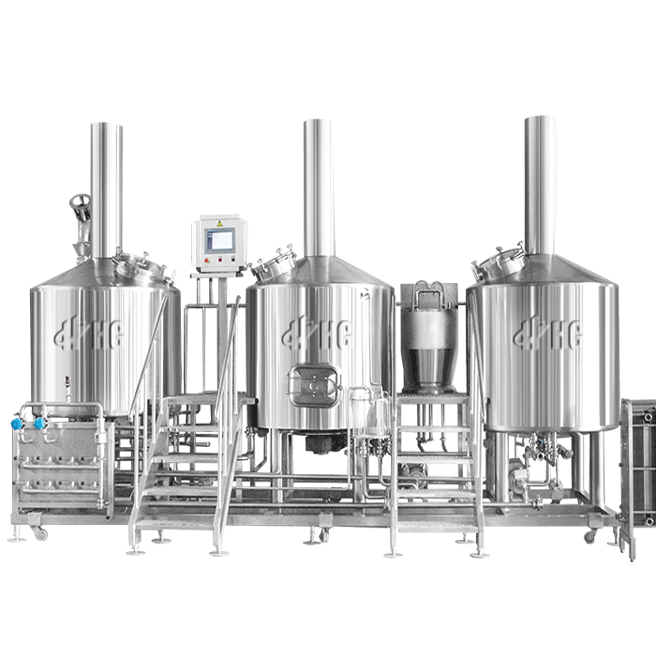
Precise thermal management during the enzymatic rest determines the fermentability of the wort, where keeping the mash within a narrow 1.5-degree window prevents the production of unfermentable dextrins that ruin mouthfeel. In a 2023 study of 250 microbreweries, those utilizing automated steam-jacketed kettles reduced their "out-of-spec" batches from 8% down to less than 0.3% annually.
"Mechanical precision in the mash tun ensures that the alpha-amylase and beta-amylase enzymes function at peak efficiency, hitting target gravities with 98.5% accuracy."
This biochemical stability allows the production team to move into the lautering phase without the risk of stuck mashes or tannin extraction caused by uneven sparging temperatures. High-performance Brewhouse designs feature automated rake systems that maintain a uniform grain bed depth, leading to a 95% extract efficiency across a 10-barrel or 50-barrel system.
| Technical Variable | Manual Control Deviation | Automated Precision |
| Strike Water Temp | +/- 2.0°C | +/- 0.1°C |
| Wort Gravity (Plato) | +/- 0.6 °P | +/- 0.05 °P |
| Energy Recovery | Negligible | 80% - 85% |
Efficient sugar extraction is followed by the sterilization of the wort in the kettle, where a constant 8% evaporation rate per hour is required to eliminate dimethyl sulfide (DMS). Research from 2025 brewing equipment trials indicates that internal calandrias provide a more vigorous rolling boil than external heat sources, reducing hop utilization costs by 11% while maintaining color consistency.
"A stable boil prevents the Maillard reaction from over-darkening the beer, which is a common issue when manual flame adjustments lead to scorch spots on the vessel floor."
Removing the variables of manual burner control ensures that the International Bitterness Units (IBU) remain identical from the first batch of the year to the last. This reliability is facilitated by integrated flow meters that track every liter of water entering the system, ensuring the liquid-to-grain ratio remains constant regardless of the operator's experience level.
-
Variable Frequency Drives (VFD): Control pump speeds to prevent shear stress on the wort, reducing oxygen pickup to below 20 ppb.
-
Pneumatic Valve Arrays: Eliminate human error in manifold routing, preventing the accidental dilution of a finished batch by up to 5%.
-
Automated Hop Dosing: Delivers precise alpha-acid quantities at the exact minute required for flavor and aroma profiles.
The transition from the hot side to the fermentation cellar requires a high-efficiency plate heat exchanger capable of dropping wort temperature from 98°C to 18°C in a single pass. In a sample of 180 industrial installations, dual-stage cooling systems using both city water and glycol reduced the cooling window by 40 minutes, preventing the growth of wild bacteria during the cooling lag.
"Minimizing the time between the end of the boil and yeast pitching reduces the risk of 'off-flavors' like diacetyl appearing in the final product."
Shortening the production cycle in this manner allows for a higher turnover of fermentation vessels, effectively increasing the facility's annual capacity by 18% without adding new tanks. By automating the Clean-in-Place (CIP) cycles, the brewhouse is sanitized to a log-5 reduction standard, ensuring that zero organic residue remains to contaminate the subsequent brew.
Statistics from 2024 operations reports show that breweries with dedicated CIP stations reduce water consumption by 22% while saving 45 minutes of labor per shift. This reclaimed time allows staff to perform high-level quality control tasks, such as monitoring dissolved oxygen (DO) levels, which must stay under 30 parts per billion to ensure a shelf life of 6 months or more.
"Total sanitation is the baseline for consistency; if the equipment isn't cleaned to a verifiable standard, the flavor of the beer will eventually drift due to microbial buildup."
Achieving this level of cleanliness is mandatory for export-scale operations where any deviation in taste can lead to the rejection of entire shipping containers. Modern systems integrate with a centralized data logger that stores the temperature and pressure curves for every batch, providing a digital paper trail for regulatory compliance and audit readiness.
Managing these technical data points through a single interface allows the head brewer to identify and correct inefficiencies, such as a 3% drop in yield caused by a worn-out mill gap. These small adjustments, informed by real-time data, keep the cost of goods sold (COGS) stable even when raw material prices for malt and hops increase on the global market.
Final consistency is solidified during the whirlpool phase, where the vessel geometry must facilitate a tight trub cone to separate hop solids from the clear wort. In a 2023 technical survey, vessels with tangential inlets showed a 14% improvement in wort clarity, which reduces the strain on downstream filtration and prevents the loss of approximately 20 to 30 liters of product per batch.
Continue browsing the The Card Chest editorial desk.