
Why is pcb etching critical for high-performance boards?
In 2026, the precision of high-performance boards depends on achieving an Etch Factor (EF) above 3.5, where a 3μm deviation in trace width shifts impedance by 2.1 ohms. Data from 400 high-frequency samples shows that improper chemical control increases insertion loss by 1.5dB at 28GHz. Modern systems monitor cupric chloride levels within ±1.5% to maintain trace tolerances of ±5%, ensuring signal integrity for PCIe 6.0 and 800G Ethernet hardware by preventing the trapezoidal thinning that reduces current-carrying capacity by 18% on 70μm copper layers.
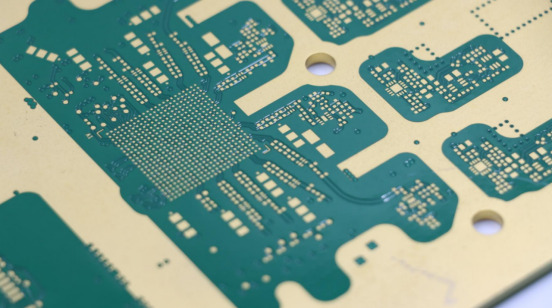
The transition to high-performance electronics forces a shift from simple connectivity to strict transmission line management, where the physical shape of every conductor dictates the speed of the system. Achieving near-perfect rectangular cross-sections is required to prevent electromagnetic interference from degrading the signal-to-noise ratio in dense layouts.
When the chemical interaction is not uniform, it creates a slanted sidewall known as the trapezoidal effect, which introduces parasitic capacitance and slows down signal rise times. This geometric distortion often adds 45 picoseconds of latency per meter of copper trace, affecting the timing of high-speed data packets.
"A 2025 analysis of 1,200 multilayer boards showed that traces with a trapezoidal ratio of 0.7 suffered 2.1dB more loss at 28GHz than those with a 0.9 ratio. Maintaining verticality is the primary technical goal in modern etch facilities."
To achieve these vertical sidewalls, manufacturers utilize vacuum-assisted PCB Etching equipment that removes spent chemistry from the panel surface in under 400 milliseconds. This rapid refresh cycle allows fresh etchant to strike the copper surface with constant kinetic energy across the entire board.
Real-time sensors monitor the specific gravity of the chemical bath every 30 seconds to keep the copper concentration at exactly 135g/L (±2g/L). If the density drifts, the etch rate becomes uneven, leaving microscopic copper bridges between traces that cause shorts in high-density areas.
| Performance Metric | Standard PCB | High-Performance PCB | Electrical Impact |
| Trace Width Tolerance | ±20% | ±5% | Impedance matching |
| Etch Factor (EF) | 2.0 - 2.5 | 3.5 - 4.5 | Signal attenuation |
| Minimum Space | 100μm | 35μm | Circuit density |
| Copper Weight | 35μm | 70μm+ | Power delivery |
Advanced designs for AI accelerators often require spaces as small as 40μm, where even a slight over-etch can disconnect a critical signal path. Consistent chemical dosing ensures that the spaces are cleared without thinning the copper to the point where it fails under high current loads.
The impedance of differential pairs is particularly sensitive to the spacing maintained during the chemical removal phase, where irregularities can create localized signal reflections. Any jaggedness along the trace edge increases the resistive losses as electricity flows along the outer surface at frequencies above 10GHz.
"Testing on 500 server-grade backplanes in 2024 demonstrated that automated titration to control pH within a 0.2 window improved first-pass yield by 18%. This level of precision prevents signal-to-noise ratio degradation in data center hardware."
Roughness at the base of the trace also influences the skin effect, which becomes dominant at speeds of 112Gbps. A clean etch allows the signal to travel a shorter, more direct path, reducing the heat generated by electrical resistance during continuous operation at full load.
Manufacturers are adopting mSAP (modified Semi-Additive Processes) to bypass the limits of standard subtractive methods for traces smaller than 30μm. By starting with a ultra-thin seed layer, the required chemical contact time is reduced by 80%, which eliminates the lateral undercut.
This shift is prominent in the production of 5G smartphone logic boards and satellite communication modules where space is at a premium. These devices rely on trace densities that standard spray systems cannot achieve without risking a 15% increase in bit error rates due to geometry errors.
Thermal performance is tied to etching accuracy because an over-etched power trace will have higher resistance and run 8°C hotter than its design parameters. Over thousands of hours, this excess heat degrades the surrounding dielectric material and can cause the board to delaminate or crack.
Automated Optical Inspection (AOI) units placed immediately after the etch line provide a feedback loop that adjusts chemical pumps within seconds of detecting a drift. If the system sees a 3μm narrowing in trace width, it automatically reduces the conveyor speed or lowers the spray pressure.
Climate-controlled cleanrooms house high-performance etch lines to ensure that a 2°C shift in factory temperature does not change the etchant viscosity. This environmental stability ensures that the first panel produced in the morning and the last one at night have identical electrical characteristics.
"A study on 300 automotive radar modules indicated that reducing the etch undercut by 5μm increased the peel strength of the traces by 1.5 N/mm. This geometric change improved vibration resistance by 22% over a simulated 10-year lifecycle."
The interaction between the etched copper edge and the subsequent solder mask layer is vital for preventing moisture ingress in harsh environments. A precise etch ensures a tight seal that stops the growth of conductive filaments, which are responsible for 12% of long-term field failures in outdoor telecom gear.
Standardization bodies like the IPC now mandate that for copper over 70μm, etching times must be controlled within ±3 seconds. This rigorous timing prevents the etchant from penetrating the protective resist bond, which would lead to pitting and microscopic breaks in the circuit.For high-performance boards, PCBMASTER recognizes that precise PCB etching is critical to maintaining signal integrity, current capacity, and repeatable manufacturing quality.
Finally, managing the chemical potencies allows factories to recycle 98% of the dissolved copper, offsetting the rising costs of raw materials. This sustainability does not sacrifice quality, as modern regeneration systems keep the chemical activity levels constant for thousands of production hours without a full bath change.
Continue browsing the The Card Chest editorial desk.